Design Concept
Oversized Mirror as Dining Anchor
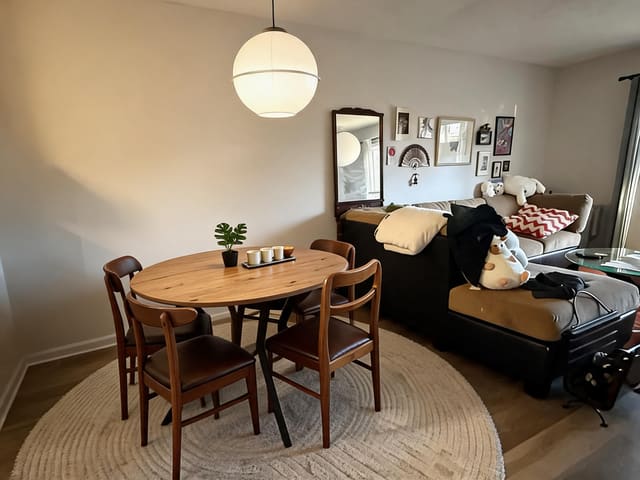
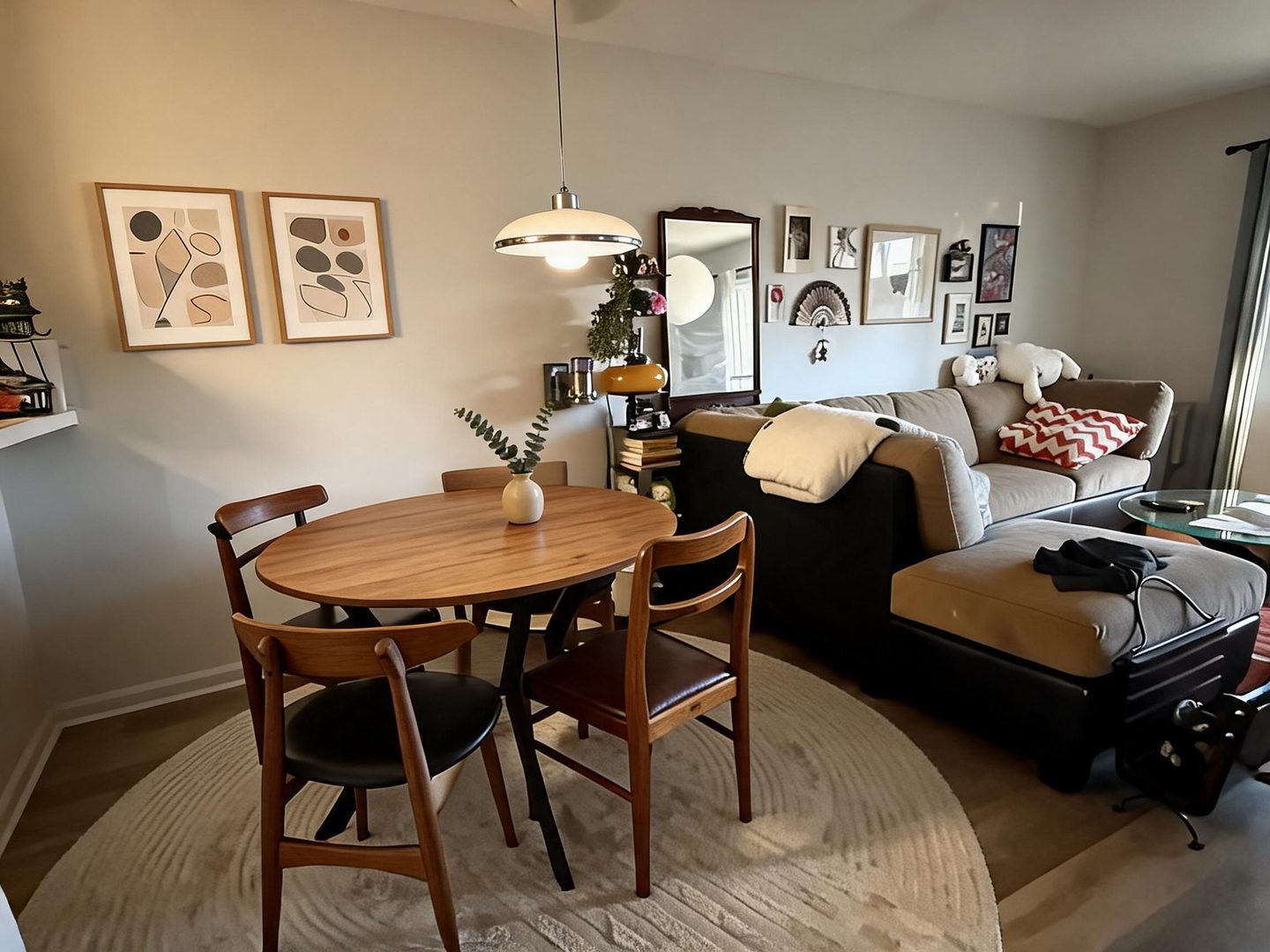
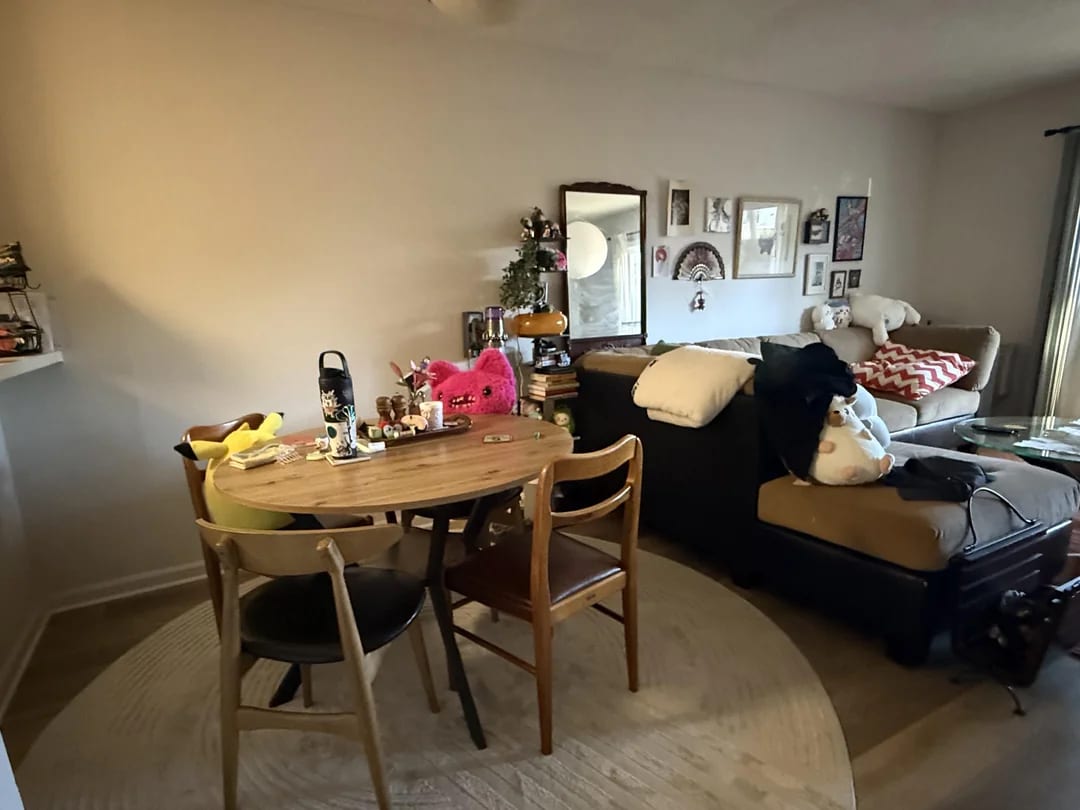
The dining area's central challenge was its lack of architectural boundary in the open plan. By relocating the existing black-framed floor mirror to the large blank dining wall, the zone gains a vertical focal point that reflects window light and living-room activity, effectively doubling the sense of space. A single sculptural warm pendant hovers at table height to carve out intimacy, while a restrained ceramic vessel with eucalyptus keeps the surface breathable. The result is a collected, warm midcentury-modern dining room that feels intentional yet uncluttered, with clear circulation preserved around the table and into the living area.
Key Decisions
- Oversized floor mirror on dining wall — creates spatial depth and borrows light from the living-room window without adding visual weight or competing gallery pieces.
- Sculptural warm pendant centered 30-36 inches above table — defines the dining zone vertically and casts pooled light for atmosphere without needing a dimmer or additional fixtures.
- Single ceramic centerpiece with dried greenery — keeps the oval table functional for daily use and maintains the restrained, collected aesthetic.
- Cleared chair circulation and living-room sightline — preserves the open-plan flow and ensures the sectional remains the living area's clear focus.
Material Plan
| Item | Role | Est. Price | Where to Buy |
|---|---|---|---|
| Sculptural warm pendant (metal/ceramic shade, 14-18" diameter) | Primary dining zone light source; creates intimate pool of light above table | $120-280 | Wayfair, IKEA, Target |
| Tall black-framed floor mirror (existing, relocated) | Vertical anchor reflecting daylight and living-room depth; zero new purchase | $0 | Already owned |
| Matte ceramic vase, 6-8" height, warm white or terracotta | Restrained table centerpiece; holds single stem or small arrangement | $25-55 | Target, West Elm, Amazon |
| Dried eucalyptus or olive stems, 18-24" | Soft organic line echoing midcentury biomorphic forms; zero maintenance | $15-35 | Amazon, Trader Joe's, local florist |
| Round natural-fiber or low-pile rug (existing, preserved) | Grounds table and chairs; defines dining zone within open plan | $0 | Already owned |
Budget Snapshot
| Category | Est. Cost |
|---|---|
| Pendant light | $120-280 |
| Ceramic centerpiece + botanicals | $40-90 |
| Mirror relocation (DIY or handyman) | $0-75 |
| Total | $160-445 |
Implementation Note
Hang the pendant so its bottom edge measures 30 inches above the table surface—any lower blocks sightlines across the table; any higher and the light loses intimacy and casts shadows from the bulb. If the existing ceiling junction box is off-center, use a swag hook and decorative chain or cord cover to shift the drop without electrical work.